
Training and advice in the Böhm method
Not put
away,
but back
to life.
We teach care teams and family carers to understand why a person with dementia does what they do. Online and on site, across the Netherlands.

01 What it brings
A more contented day. For everyone in the house.
Once you understand behaviour, you don't need to fight it. You notice it in the resident, in the team and in the budget.
For the person
Calm and a sense of home. Care matches what is normal and familiar to this one person.
Active for longer. People keep taking part and do what they still can themselves.
For the team
Less misunderstood behaviour. Without medication and without restraints.
Less stress. A shared language and a clear way of working, from gardener to nurse.
For the organisation
Lower costs. More independence and fewer escalations mean less intensive care.
Living at home for longer. District teams and family carers learn to connect too.
02 The Böhm method
With dementia, people fall back on what was once normal.
Recent memories fade. What we lived through in our formative years becomes most important again. We adapt to that world, not the other way round.
A life on one line
this is where we connect
The formative years, up to about 30. This is when everyone's own picture of normal forms: habits, taste, ways of dealing with setbacks.
Today. With dementia, that picture becomes the guide again. Know it, and behaviour that seems incomprehensible starts to make sense.
Personal normality
Everyone has their own picture of what is normal. That picture, not ours, shapes the care.
Psychobiography
What counts is not the facts of a life, but the feelings that go with them. That emotional biography explains today's behaviour.
Seven levels
At what level can someone be reached? Knowing that, you can connect, communicate and activate.
Dementia is not a straight line down.
Böhm describes seven levels of interaction, from the adult person to primal communication. On a good day someone may be a step higher. The team learns to recognise the level and start there.
03 Where it starts
Who was this person at twenty?
Not: what is the diagnosis? But: what was normal for this person? How did an ordinary day begin, what was on the table on Sundays, how did people deal with setbacks?
The team builds this emotional biography step by step, with the person and their family. It becomes the basis of an individual care plan that is measured and adjusted.

Monday is washing day
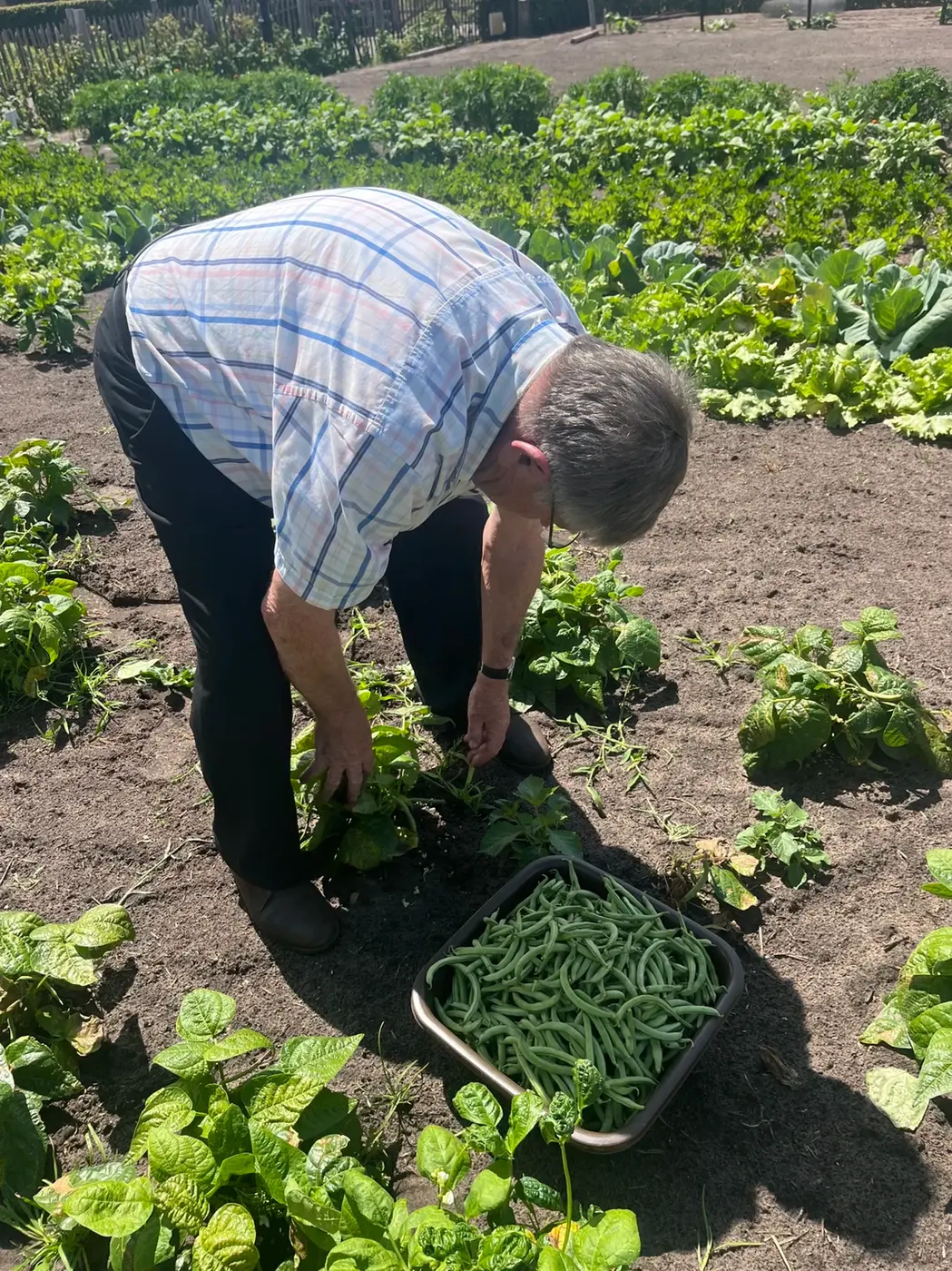
beans from the garden

together in the workshop
04 Training and advice
Learn to work from the person's world.
The method only works when everyone takes part. That is why we train care professionals and whole teams, and help organisations embed the method.
In the course you learn to see through the eyes of a person with dementia: building an emotional biography, assessing the level of interaction and writing an individual care plan. The foundation course is accredited by V&VN.
Advice
A house that feels like home
Advice on furnishing homes and living groups according to biographical normality. Old things only help when they carry personal meaning.
Not sure where to start?
Tell us what your team is facing, and we'll find the first step together.
Book an introduction05 Who it is for
Anyone who cares for someone.
Care organisations
Nursing homes, small-scale living, care farms and home care that want to embed person-centred care with a proven method.
In-house training and certificationCare professionals
Carers, nurses and support workers who want to deepen their person-centred care.
View the courseFamily carers
The book Samenleven met dementie (Living with dementia, in Dutch) gives practical guidance for home. Order it directly from us.
Order the book06 About us
Grown on the care farm.
De Mensch started where the method began in the Netherlands: at Zorgboerderij Giersbergen in Drunen. We believe older people and people with memory problems or dementia have a right to a meaningful, active and dignified life.
- 2015Zorgboerderij Giersbergen becomes the first certified Böhm organisation in the Netherlands.
- 2016Entrepreneur award from the industry association.
- 2018De Mensch is founded, recognised by ENPP-Böhm.
- TodayTraining, peer supervision and advice for teams across the Netherlands.

Dolf Becx
Historian, liveability adviser, certified Böhm trainer
Discovered the method in Luxembourg and translated it into Dutch together with ENPP.
"As a historian, the link between the lived past and present-day behaviour spoke to me straight away."

Hellen Junggeburth-van Rooij
Care entrepreneur and carer
The first care entrepreneur in the Netherlands to commit fully to Böhm.
Let's start
with the person.
Book a no-obligation introduction with Dolf. Together we'll look at which training or advice suits your team.
